
Manufacturer and primary distributor of Connect Pacific® kiosks. Instead of brochures and promo pages, ATi now uses 3D to showcase their kiosks. Clients consistently describe the AR experience as more useful than any printed material.
ati.sc

Let shoppers see any product, sofa, lamp, bike, appliance, console, in their real space, at true scale, from any phone. No app required for users, no SDK to install in store.
From the product page to your shopper's room, in one tap.
Aggregate benchmarks reported by retailers using WebAR & 3D.
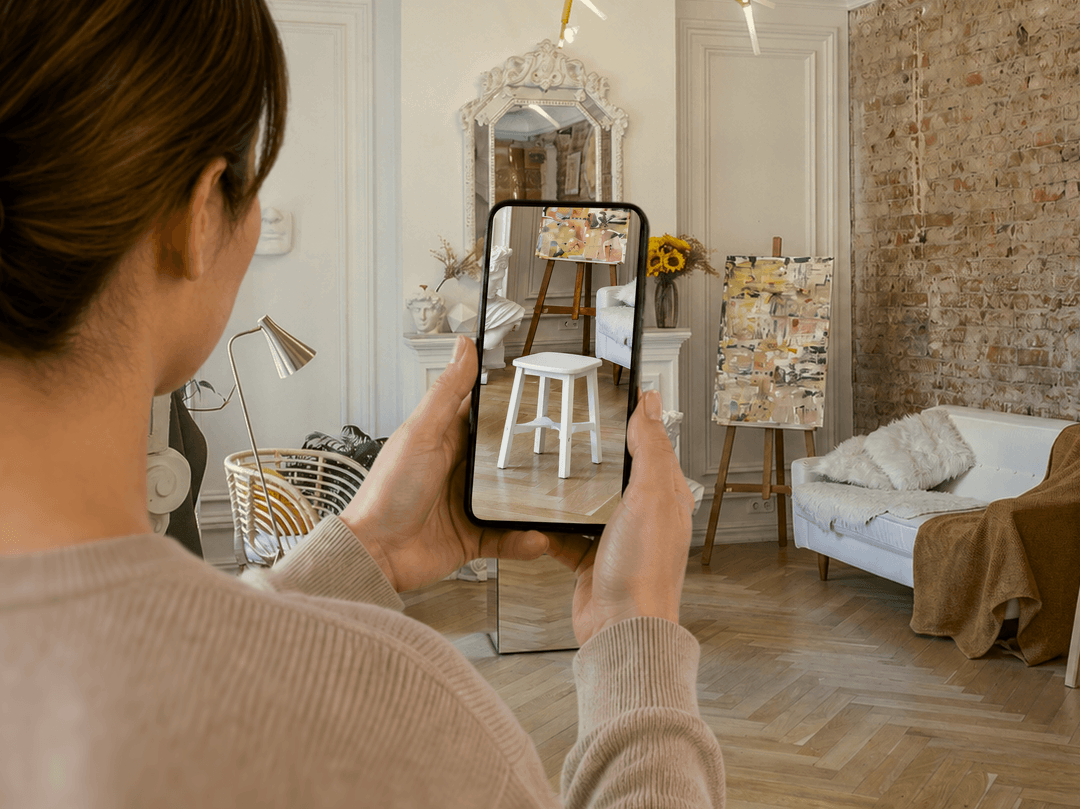
Core AR & 3D is the default Vizbl surface, everything else (Showroom AR, Construction AR, AutoFit, Specialty AR) is built on this engine. A sofa, a bed frame, a backyard pool, wheels on the actual car, rugs, flooring, jewelry, apparel, customers see any product in their environment instantly. No showroom visit, no item shipped for consideration, all from any phone.
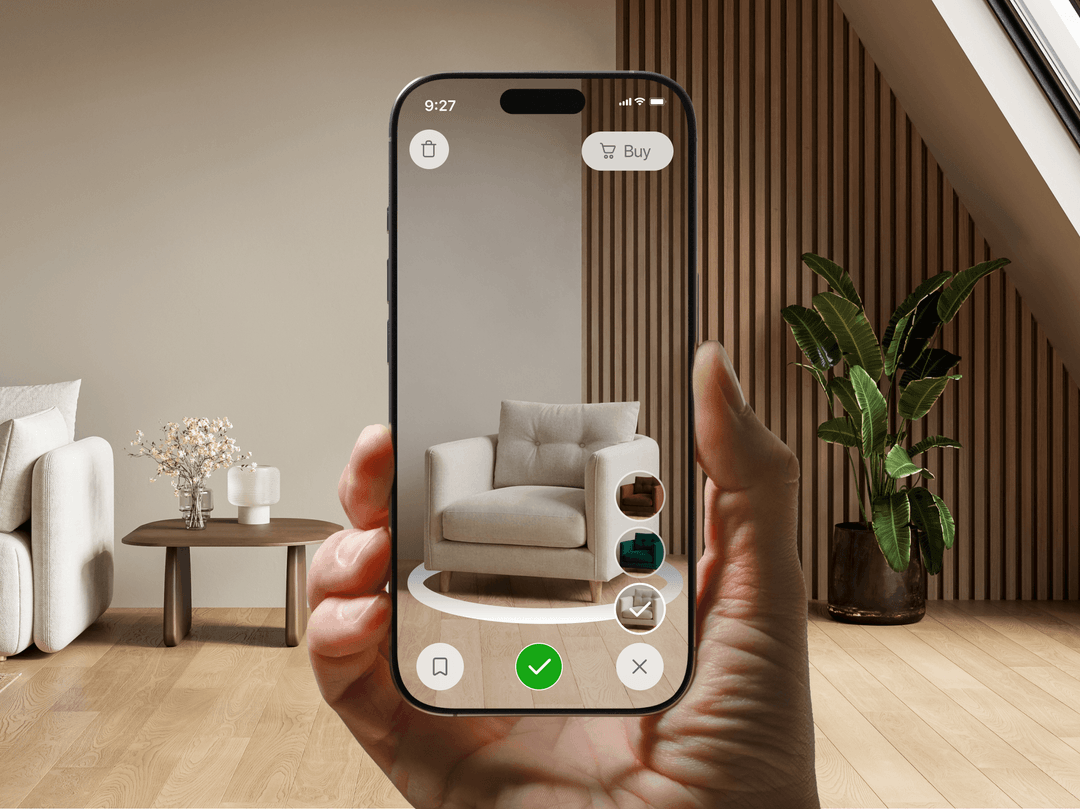
Shoppers switch materials, finishes and modular layouts in real time, oak to black ash, velvet to leather, brass to polished chrome. Add a chaise, swap the legs, extend a corner module. Every change applies instantly, the 3D renderings update live and carry over into AR. The configurator runs on your existing templates and sets up in minutes inside the Vizbl editor.
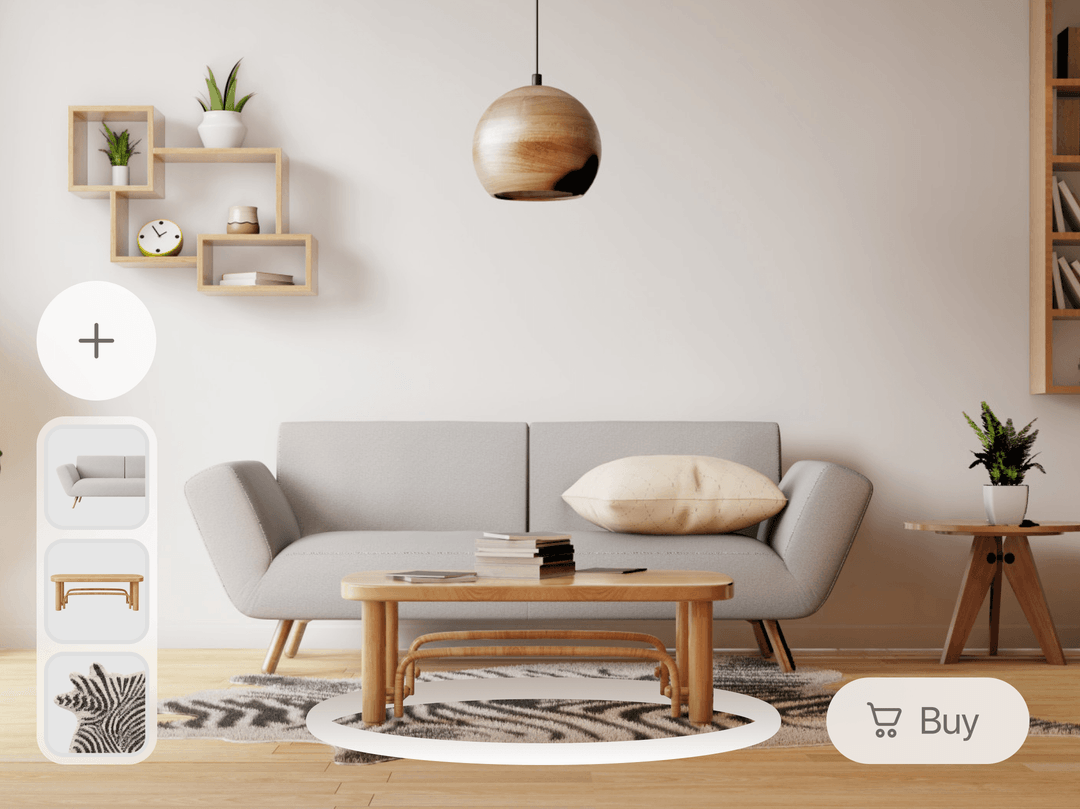
Customers don't shop one product at a time, they're furnishing a room. Multi-AR lets them pull a sofa, a side table, a rug and a floor lamp into the same scene in real time, through their phone camera, right from the product page. They compose the look, test designs, and add everything to cart.
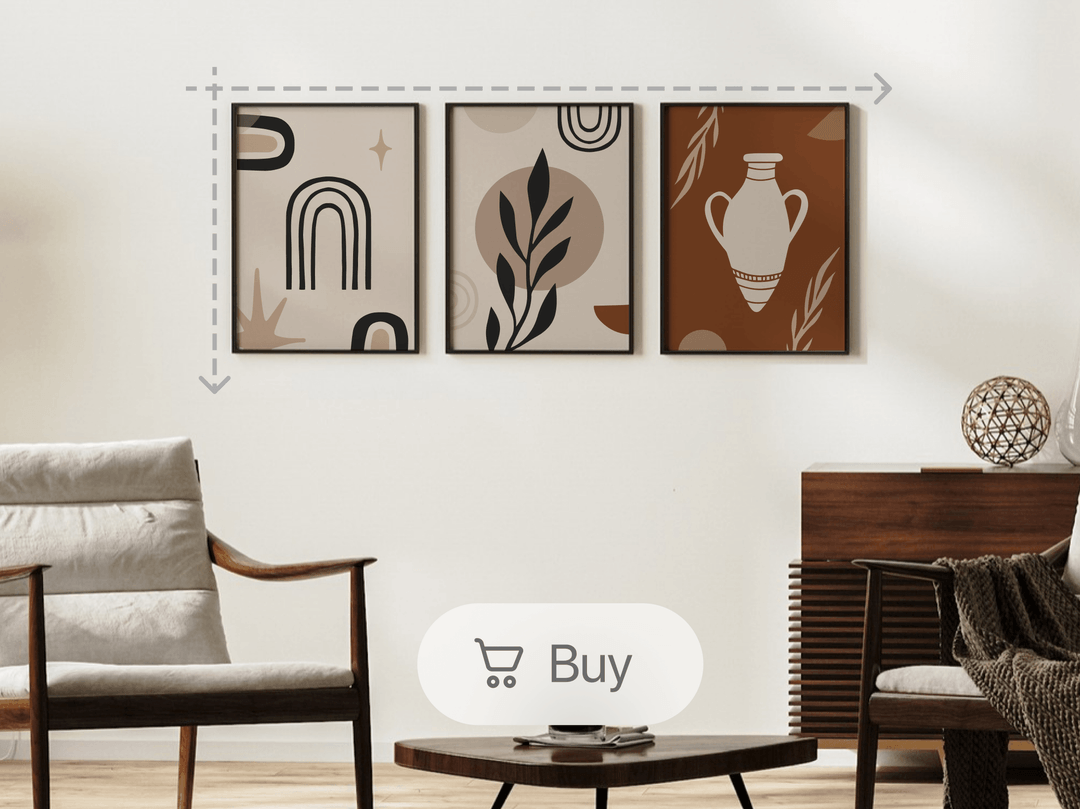
Vizbl automatically aligns pieces that belong together, wall art, shelving, modular furniture. As the customer adds items they snap into place and distribute evenly. The gallery wall builds itself, and everything goes in the cart.
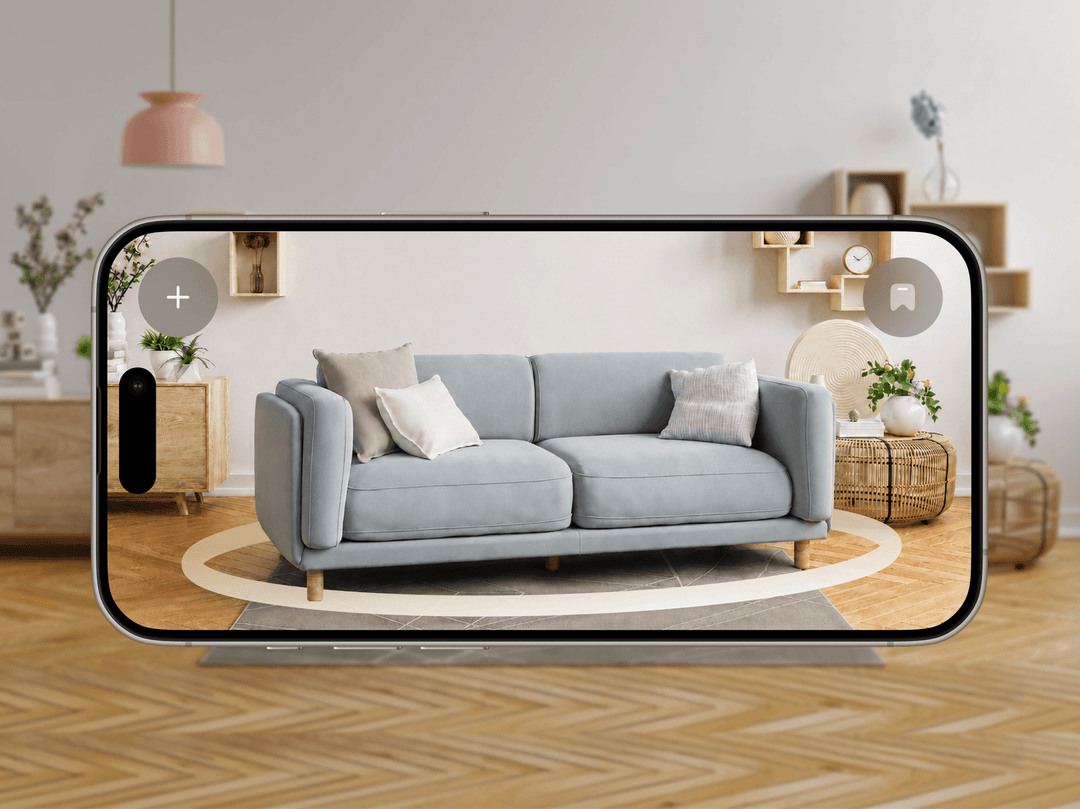
No matter what the room looks like, Vizbl detects any horizontal, vertical or overhead surface in the camera frame, accurate to ±5 mm. A sofa lands on the floor, art goes on the wall, a pendant light finds the ceiling. It even recognizes surfaces on freestanding objects, place a virtual lamp on a real table and it sits on the table, not the floor beneath it.
Drag to rotate, scroll to zoom. On a phone, tap “View in your room” to drop it into your space in AR, exactly what your shoppers get.
Retailers who add Vizbl see the difference across the board, in engagement, in conversion, in returns. Here's what that looks like in practice.
Manufacturer and primary distributor of Connect Pacific® kiosks. Instead of brochures and promo pages, ATi now uses 3D to showcase their kiosks. Clients consistently describe the AR experience as more useful than any printed material.

Furniture maker working with natural materials. After adding AR to their site, customers place a table in their actual room before ordering, getting proportions and finishes right the first time.

Children's furniture in solid birch plywood. With AR on their product pages, parents spend more time exploring, come back more often, and feel confident in what they're buying.
Instead of static visuals or isolated texture swatches, Vizbl turns objects into full-room previews, helping customers compare finishes, understand scale and move toward purchase with more confidence.
Customers launch the preview straight from your product page or a link. No separate apps, no complicated setup, no extra step that pulls them away from the buying journey.
You don't need to visualize the whole catalog from day one. Start with bestsellers, premium finishes and high-margin products where customers hesitate most, then scale on performance.
Connect to Shopify via the native app, products sync automatically. On any other platform Vizbl connects via API, no 3D-modeling expertise required on your end.
Photos show what a product looks like. AR lets shoppers check whether it actually works for them. A customer can measure their living room, double-check dimensions and still order a sofa that doesn't fit, because measuring is imprecise and spatial judgment is hard. With AR they place it in their room first, at scale, next to their real furniture. Photos answer “what does it look like?”, AR answers “will this work in my home?” Fewer doubts means fewer returns.
Building AR in-house means sourcing 3D models, setting up storage, integrating it and handling every edge case, that can cost as much as a full app build. Vizbl is different: most of that work is already done. You pay for a solution that plugs in, for most stores a fraction of building it yourself.
There's a well-documented psychological effect, the endowment effect: once people feel something is theirs, they're more likely to buy. When a shopper places your product in their room and sees it there, they've already started owning it mentally. The decision shifts from “should I buy this?” to “do I want to give this up?”, a much easier decision.
AR works best when the buyer must evaluate size, fit or appearance before committing and can't from photos alone, most obviously furniture, home décor, appliances and fixtures. A good rule of thumb: AR is worth it if you have high return rates from in-person mismatch, products that fit a space or body, variants across color/material/size to compare, or items made at scale with consistent 3D geometry.
No. Vizbl comes with detailed guides that walk you through setup, and if you get stuck we'll help you get it live, whether you're on Shopify or a custom site.
Most of the heavy lifting is on our end. Create a Vizbl account, upload your 3D model and link it to the right product page (no model yet? we can make one), configure the features you need, and upgrade to a paid plan for advanced functionality. After that the only ongoing task is keeping your 3D models current.
Products where fit, scale or appearance in context matters and photos can't fully answer: furniture and interior objects, wall and floor coverings, lighting, large appliances, garden and outdoor décor, children's play equipment, architectural elements, indoor plants.
They're related but distinct. 3D visualization shows a product as a 3D object to rotate, zoom and explore from any angle. AR goes further, placing that same model in the customer's real environment through their camera, at actual scale and light. Most Vizbl setups offer both, the 3D viewer for close inspection, AR for spatial context.
A 20-minute demo with three of your bestsellers. Live in your room, ±5 mm accurate. Bring your hardest product.